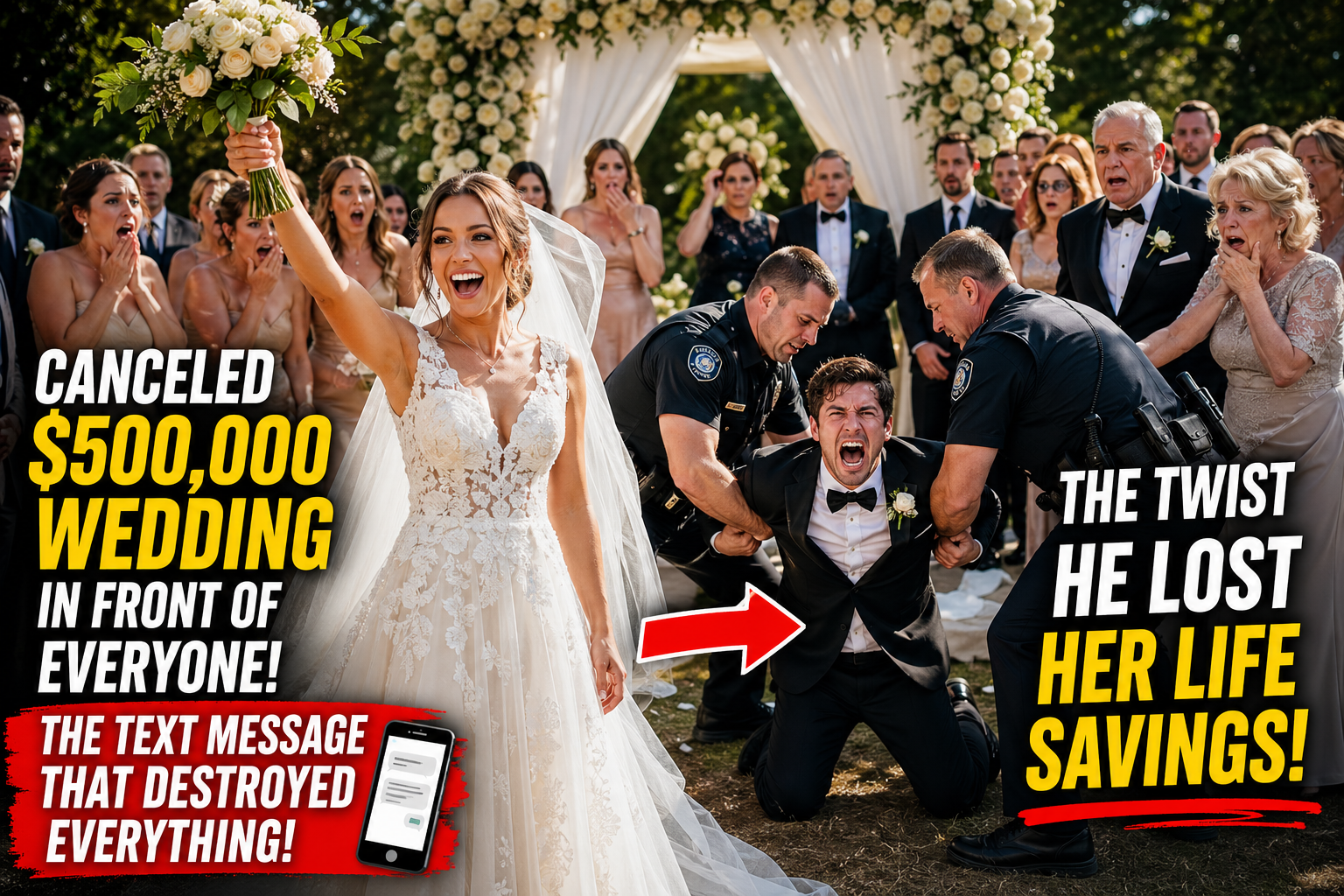
“I can’t marry you. The wedding is off. Don’t contact me. I’m sorry.”
Those were the four cold, gutless sentences that shattered everything.
I was standing in the center of a bright, elegant private dining room at the country club, holding a crystal champagne flute, surrounded by laughter, gifts, and women who loved me. It was supposed to be one of the happiest days of my life—my bridal shower.
Seconds earlier, my best friend Chloe had been preparing to toast my future with Julian. In just nine days, we were meant to be married at a historic estate, with hundreds of guests, a live band, and a honeymoon already booked along the Amalfi Coast.
When my phone buzzed and I saw his name, I smiled—thinking it was something sweet.
Instead, it was the end.
I didn’t cry at first. A strange, hollow laugh escaped me instead—the kind that comes when your mind refuses to accept reality. Chloe noticed immediately. My body went still, my face drained of color.
“Elena?” she asked, rushing toward me.
I couldn’t speak. I just handed her my phone.
Her expression turned to horror. “This can’t be real…”
But it was.
I excused myself calmly and slipped into the marble bathroom. I stared at my reflection, forcing myself to stay composed. Then I typed the only response that felt right:
“My condolences.”
But I wasn’t done.
I forwarded his message to his parents—Richard and Victoria—who had proudly financed the entire wedding. Beneath it, I added: I thought you should see how your son chose to cancel everything. I’m currently at my bridal shower.
Ten minutes later, his mother was calling. I ignored it. Messages flooded in. I stayed silent.
Fifteen minutes after that, Julian finally texted again:
“Why did you send that to my parents?”
Not Are you okay? Not I’m sorry. Just anger.
Then his father called.
“Elena,” he said, his voice shaken, “do you know where Julian is?”
“No,” I replied. “I assumed he was at work.”
There was a pause.
“He’s missing,” Richard said. “And… he emptied your joint account.”
My breath caught. “You mean… he took our money?”
“I think he’s done something far worse than just cancel a wedding,” he said grimly.
I left the party quietly and drove straight to their estate.
The house, usually filled with luxury and pride, felt suffocatingly tense. Papers were scattered everywhere. Victoria sat pale and trembling. Richard paced with a stack of bank statements.
They had found a note Julian left behind: I’m sorry. It’s the only way to fix it.
At first, I thought this was just cold feet. But it wasn’t.
Julian had been secretly gambling—deep in high-risk crypto trading, using money that wasn’t his. When markets crashed, he didn’t stop. He doubled down. Lied. Covered losses with more risk.
“He wasn’t investing,” Richard said bitterly. “He was running a scheme to hide his failures.”
Then came a knock at the door.
Three men in suits walked in, calm and precise. One introduced himself as representing private investors.
Julian owed them five million dollars.
He had forged his parents’ signatures and used their estate as collateral.
Everything was about to collapse.
Then Richard got another call.
They had found Julian.
He had driven into the woods and taken a large number of pills.
He survived—but barely. He was in the ICU.
Relief flickered through the room—but it didn’t last.
The debt collectors remained unmoved. The money was still owed.
In the days that followed, my life became damage control.
The wedding was canceled. Vendors were paid off. Gifts were returned. Rumors spread—but no one knew the truth.
Julian woke up in a hospital bed—handcuffed.
His company exposed everything: fraud, stolen funds, deception.
And then I discovered the worst part.
Our savings—gone.
Not in one moment of panic. But slowly, over months. He had been draining it piece by piece.
I hadn’t been his partner.
I had been a resource.
Six weeks later, he asked to see me.
I went.
The detention center was cold, sterile, nothing like the life he had pretended to live. He looked smaller. Broken. Afraid.
“Elena,” he said, voice shaking, “I loved you. I didn’t mean for this to happen.”
I studied him through the glass.
“Maybe you did love me,” I said. “But you loved your ego more.”
He cried. Apologized. Said he was ashamed.
But shame doesn’t undo betrayal.
“You weren’t brave enough to tell the truth,” I said quietly. “You only tried to escape when everything collapsed.”
He had no answer.
I ended the visit without another word.
When I walked out and the heavy door closed behind me, I felt something unexpected.
Relief.
Losing the wedding didn’t destroy my life.
It saved it.
Because sometimes, the worst moment reveals the truth you needed all along—and walking away becomes the strongest thing you can do.